All published articles of this journal are available on ScienceDirect.

Framework to Improve the Utilization of EMTCT Services among Pregnant and Lactating Women in Gauteng Province, South Africa
 iD
Takalani Tshitangano2
Shonisani Tshivhase1 , *
iD
Takalani Tshitangano2
Shonisani Tshivhase1 , *
Authors Info & Affiliations
Abstract
Introduction
The use of Elimination of Mother-to-Child Transmission services plays an important role in public health because it helps to prevent HIV transmission from mothers to infants. Accessibility of these services remains a challenge, especially in countries with high prevalence rates. A framework to improve the use of EMTCT services is helpful to ensure that children born to women living with HIV remain HIV-negative. This study aimed to develop and validate a framework to improve the utilization of EMTCT services among pregnant and lactating women in Gauteng Province of South Africa.
Methods
Primary data were collected from 681 pregnant and lactating women utilizing EMTCT services in the City of Ekurhuleni at the selected facilities. The qualitative and quantitative data provided a deeper understanding of the barriers to EMTCT utilization and perceived strategies to improve its utilization.
Results
The study revealed barriers that contributed to poor EMTCT utilization, which include, a lack of transport costs to the facility, staff attitude, long waiting times, gender-based violence, and denial of HIV status. To mitigate these barriers, the EMTCT framework was developed using the Health Belief Model and Build, Overcome, Explore, Minimize model, incorporating the Strengths, Weaknesses, Opportunities, and Threats (SWOT) findings.
Discussion
The developed framework has clearly defined objectives, activities, responsibilities, and outcomes, which serve as practical tools for implementation. The proposed framework was validated through consultations with stakeholders and the Delphi technique. Experts and stakeholders participated in the process of validating and confirming the effectiveness of the developed framework to improve the utilization of EMTCT services in Gauteng Province. This study identified practical strategies such as health education, peer support, male involvement, and the use of the Treatment Navigation Model. The framework provides a clear, context-specific approach to strengthening health systems and getting closer to eliminating mother-to-child HIV transmission.
Conclusion
The study found that the utilization of EMTCT services by pregnant and lactating women's is heavily influenced by social and economic realities such as insufficient awareness, partner abuse, and financial reliance.
1. INTRODUCTION
The Elimination of Mother-to-Child Transmission (EMTCT) program is a global initiative launched by the World Health Organization (WHO) in 2010 to reduce HIV and syphilis incidence in infants [1]. Globally, 39.9 million people were living with HIV in 2023, including 1.4 million children under 15, with women and girls accounting for 53% of all cases [2]. Although new HIV infections have declined from 62% to 2.7% between 2010 and 2024, vertical transmission of HIV remains a concern, particularly in Sub-Saharan Africa, which accounted for 62% of new infections in women and girls in 2023 [2, 3]. This underscores the urgency of strengthening strategies to reduce vertical transmission. EMTCT services provide comprehensive antenatal care, including HIV and syphilis testing and treatment, safe delivery practices, infant testing and treatment, and breastfeeding support [4].
Countries such as Cuba, Thailand, and Cambodia have achieved EMTCT milestones, with Thailand becoming the first Asian country to eliminate MTCT of HIV and syphilis [1, 5]. In Africa, progress has been uneven. While Botswana and South Africa have advanced considerably, challenges remain in service utilization. In Uganda, uptake among adolescents and young mothers remains as low as 30.1% [6], while in Cameroon, knowledge gaps among lactating women persist [7, 8]. Burkina Faso reports 80% ART initiation among pregnant women, yet issues of adherence and postnatal follow-up continue [8]. These findings illustrate the mixed progress across different contexts, highlighting the need for locally tailored interventions.
South Africa, which carries the largest HIV epidemic globally, has made substantial strides in EMTCT service delivery. ART coverage among pregnant women increased from 11% in 2010 to 24% in 2013 [6], contributing to a reduction in MTCT rates to 2.1% in 2020 [9, 10]. However, adherence challenges persist, with ART default rates rising by 20% during pregnancy [6]. The COVID-19 pandemic further disrupted EMTCT implementation, increasing HIV incidence among women and reducing access to antenatal and testing services [11]. At the provincial level, evidence from Gauteng reveals both progress and gaps. Mukomafhedzi et al. [12] reported improvements in antenatal bookings but identified weaknesses such as poor monitoring and lack of knowledge about EMTCT. Similarly, Janse van Rensburg et al. [13] found no significant differences in EMTCT coverage between South African and immigrant women, suggesting systemic barriers rather than nationality-specific ones.
Nationally, there is progress in EMTCT coverage; however, provincial-level barriers remain underexplored. In Gauteng, challenges such as inadequate knowledge, stigma, socioeconomic dependence, gender-based violence, and inconsistent adherence to ART are poorly documented and insufficiently addressed. Few studies have examined how facility-based strategies, community engagement, and partner support could be integrated into a comprehensive framework tailored to the province’s context. This study seeks to develop and validate a framework to improve the utilization of EMTCT services among pregnant and breastfeeding women in Gauteng Province, South Africa. By removing identified barriers and leveraging strategies, the study aims to strengthen adherence, enhance maternal and child health outcomes, and contribute to the achievement of SDG 3, which is good health and well-being by advancing efforts to end the HIV/AIDS epidemic and improve maternal and child health outcomes.
2. MATERIALS AND METHODS
A convergent parallel mixed-methods approach was employed, where the study results obtained from both qualitative and quantitative approaches were merged.
2.1. Study Population and Sampling
The study population was pregnant and lactating women in Gauteng Province, South Africa, who attended EMTCT services at selected facilities (Winnie Mandela, Esangweni CHC, Nokuthela Ngwenya CHC, Daveyton Main clinic, Phola Park CHC, and Kempton Park Civic Centre clinic) during the study period. The target population consisted of women aged 18 years or above who were utilizing EMTCT services. A non-probability sampling method was used because it was convenient to select pregnant and lactating women with the required characteristics of accessibility and availability [12]. For qualitative design, data saturation occurred after interviewing 25 participants through in-depth individual interviews, and for quantitative design, data were collected from 681 pregnant and lactating women using a self-administered questionnaire.
2.2. Setting for the Development of the EMTCT Framework
The framework was developed in the City of Ekurhuleni in Gauteng Province of South Africa from 18 April 2023 to October 2023. The City of Ekurhuleni was chosen for this study because there is a low uptake of EMTCT services, resulting in a high positivity rate of children below 10 [12]. In addition, there is poor retention in lactating mothers post-delivery, which leads to exposed children not being diagnosed.
2.3. Ethical Consideration
Permission was obtained from the Gauteng Department of Health and selected facilities managers. Ethical clearance was obtained from the University of Venda research ethics committee and the Ekurhuleni Health District Research Committee. Participants were informed about the purpose of the study. Throughout the study, participants' rights and confidentiality were maintained. Informed verbal consent was obtained from each interviewed participant. Participants were encouraged to participate without coercion, and they were informed that participation was voluntary, that they could withdraw at any time, and that no remuneration would be provided for being part of the study. To ensure anonymity, codes were used instead of names.
2.4. Merging Results from Qualitative and Quantitative Studies
The study employed a convergent mixed-methods design, integrating quantitative and qualitative data to provide a comprehensive understanding of barriers affecting the utilization of EMTCT services. Quantitative data from 681 pregnant and lactating women were analyzed using descriptive statistics and the Chi-Square test using Stata software version 14.0. Qualitative data from in-depth interviews were thematically coded to identify key barriers and facilitators. Data were integrated using a joint display approach, linking quantitative prevalence with qualitative insights to contextualize participants’ experiences (Tables 1 and 2). The merged findings provide a nuanced understanding of EMTCT utilization, informing targeted interventions to improve access and adherence. Table 1 outlines the barriers affecting the utilization of EMTCT services, whereas Table 2 outlines potential strategies to enhance the utilization of EMTCT services.
| Theme | Sub-Theme | Quantitative Evidence | Qualitative Evidence (Participant Quotes) |
|---|---|---|---|
| Barriers to EMTCT Utilization | Inadequate Knowledge | 41% of respondents had poor knowledge of EMTCT services; 21% had no formal education. | Participant 6, 30 years old, stated that “I didn't have enough information or knowledge about EMTCT services because I thought that other children were HIV-negative, even if this one would be negative.” |
| Gender-based Violence | 26% lacked partner support; 79% were single. | Participant 17, 33 years old, stated that, “I haven’t disclosed my status to my partner because he is abusive, and that made it difficult for me to take treatment.” | |
| Socioeconomic Status | 61% unemployed; 28% reported unemployment as a barrier; 71% cited transport costs. | Participant 5, 27 years old, “I am afraid that he might beat me or leave me because he is the one supporting me.” | |
| Health System Barriers | 62% reported long waiting times; 43% reported staff shortages; 34% reported staff attitude. | Participant 14, 32 years old, “The clinic is always so crowded, and sometimes the staff is unfriendly, which makes me not want to come.” |
| Theme & Sub-theme | Quantitative Results (% Support) | Qualitative Quotes | Integrated Interpretation |
|---|---|---|---|
| Theme 1: Facility Strategies | |||
| Sub-theme 1: Treatment Navigation Model (TNM) | Pre-appointment reminders: 70.3% | Participant 2, aged 24 years, said, “Telephonic tracing to remind us about the clinic appointment assists… if it wasn’t for the call… I wouldn’t have been here.” “I don’t want to be called… it adds stress.” |
Reminders and navigation support are highly valued by most of the participants. |
| 2.2. Health Education at Facility | Education on follow-up: 91% General EMTCT education: 91.2% |
Participant 4, aged 32 years, said, “Health education on EMTCT… while we are sitting in the queue gives us more information.” (P4, 32 yrs) Participant 7, aged 24, said, “Educating women and men… most people do not have enough knowledge.” |
Health education builds knowledge, corrects misconceptions, and strengthens decision-making. |
| Theme 2: Community Support | |||
| Sub-theme 1: Community Health Workers (CHWs) and Mobile Clinics | Mobile clinics: 77.9% | Participant 6, aged 36, stated, “CHWs should educate people… disclosure improves adherence.” Participant 8, aged 30 years, said, “Mobile clinics… most people don’t want to come to the clinic.” |
CHWs and mobile clinics decentralize services, reaching underserved women. |
| Sub-theme 2: Peer-to-Peer Support Groups | Peer networking: 74.6% | Participant 13, aged 20 years, stated, “Peer-to-peer support groups… help us share our challenges.” Participant 13, aged 20 years, stated that “Learning from others who have been through it is better.” |
Peer groups enhance social support, disclosure, and adherence. They reduce isolation and stigma, showing high potential for retention in care. |
| Theme 3: Partner Support | |||
| Sub-theme 1: Male Involvement/Partner Support | Male involvement: 74.6% | Participant 11, aged 23 years, stated that, “Disclosure to partner and encouraging partner testing might assist women to comply.” Participant 22, aged 27 years, said, “They should encourage men to test… they are the ones who give us problems.” |
Partner support improves ART adherence and disclosure, but male reluctance remains a barrier. |
2.5. Development of the EMTCT Framework
The development of the EMTCT framework is crucial for bridging the gap between available EMTCT services and actual service utilization. It will serve as a critical tool for health planners, implementers, and policymakers aiming to achieve the sustainable elimination of pediatric HIV infections and support the realization of UNAIDS' 95-95-95 targets and Sustainable Development Goal 3.
2.5.1. Application of SWOT Analysis
A SWOT analysis was applied to the triangulated and merged findings from the qualitative and quantitative results of the study. The SWOT analysis helped the researcher identify strengths, weaknesses, opportunities, and threats in existing EMTCT services [14]. It further facilitated a comprehensive understanding of the internal and external factors influencing the success of EMTCT programs, which needed to be incorporated into the development of a risk management framework. This ensured that the proposed framework would perform optimally and improve current measures. The SWOT analysis also helped to avoid weaknesses and counter future threats that could derail the successful implementation of the proposed EMTCT framework.
2.5.2. Build Overcome Explore Minimise Model (BOEM model)
In line with the intended objectives, the proposed EMTCT framework was adapted to improve the utilization of EMTCT services among pregnant and lactating women. The BOEM model helped the researcher to develop the EMTCT framework. According to Nyelisani [15], the BOEM model is a framework designed to help individuals or organizations navigate challenges and seize opportunities through a structured approach. This model emphasizes the integration of multiple healthcare components, thereby addressing the multifaceted barriers that pregnant and lactating women face in accessing EMTCT services, ultimately contributing to the goal of eliminating mother-to-child transmission of HIV. The BOEM model offered a foundation for the development of the framework [15].
3. SWOT ANALYSIS RESULTS
The findings obtained from both the qualitative and quantitative studies identified strengths, weaknesses, opportunities, and threats to assess current measures for enhancing the utilization of EMTCT services in Gauteng Province. A SWOT analysis has been defined as a tool used to measure an organization's strengths, weaknesses, opportunities for development, and threats that can affect the desired outcomes of a program, as summarized in Table 3 [14, 16].
| STRENGTHS | WEAKNESSES |
| • Availability of trained healthcare providers (midwives and medical doctors, facility managers, and maternal and child health coordinators • Accessibility and affordability of EMTCT services, and • Integration of services, infrastructure, and resources. |
• Shortages of trained personnel. • Inadequate integration of maternal and HIV services. • Lack of community engagement. • limited access to HIV testing and treatment services |
| OPPORTUNITIES | THREATS |
| • Potential to influence policy changes that support the integration and accessibility of EMTCT services. • Innovative care models. • Funding opportunities. • Partnerships with community-based organizations. |
• Stigma and discrimination. • Political instability. • Limited access to healthcare services. • Negative staff attitudes toward pregnant women and lactating mothers. |
The researcher reviewed all the data and repeatedly listed strengths, weaknesses, opportunities, and threats (SWOT). The SWOT matrix was developed according to strengths, weaknesses, opportunities, and threats (Table 4). The information on the SWOT matrix was used, and the results became actionable entities. The BOEM approach (Build on the strengths, Overcome the weaknesses, Explore the opportunities, and Minimise the threats) was employed to develop the framework for enhancing the utilization of EMTCT services among pregnant and lactating women in Gauteng Province [14].
Table 4.
| Strengths | Weaknesses | ||
|---|---|---|---|
| Internal factors | Human resources | Human resources | Internal factors |
| • Midwife-trained personnel render EMTCT services. • Health promoters help provide information on EMTCT services. |
• Fewer lower category individuals who are trained in EMTCT. • EMTCT services are offered during the day, Monday to Friday. |
||
| Competence | Competence | ||
| • Midwives rendering EMTCT services are well-trained in the provision of services. | • When the trained midwife is off duty, the clinic is left with non-skilled personnel. • There is a knowledge deficit about EMTCT services. |
||
| Financial cost | Financial cost | ||
| • EMTCT services are free. • Clinics are within a 5 km walk for clients. • Availability of ARVs |
• Unemployed or single mothers with no transport money to utilize EMTCT services. • Distance from the clinic |
||
| Services | Services | ||
|
Accessibility • All clinics were rendering EMTCT services. • There was a mobile clinic for underserved communities. |
Accessibility • Distance from the clinic is more than 5 km. • No transport money to visit the clinic hinders the use of EMTCT services. |
||
|
Acceptability • Staff members and community healthcare workers value their clients. • Availability of community healthcare workers to support women utilizing EMTCT services. |
Acceptability • Pregnant and lactating women attend clinics that are far away if they didn’t disclose their status to their partners. • Fear of stigma and discrimination |
||
|
Availability • EMTCT services are available in all public health sectors. MOU operates 24 hours a day. • All pregnant and lactating women newly diagnosed with HIV were started on ART. |
Availability • No EMTCT services were rendered over the weekend or after-hours. |
||
|
Affordability • EMTCT services are free of charge in the public health sector. |
Affordability • Unaffordable transport to and from the clinic. |
||
| Opportunities | Threats | ||
| External factors | Political | Political | External factors |
| • Leveraging national and local government programs that prioritize maternal and child health. • Engaging local leaders and influencers to raise awareness and reduce the stigma associated with HIV. • Conducting community-based educational programs to inform and encourage women to use EMTCT services. |
• Insufficient human resources to offer EMTCT services. • Changes in government policies that might deprioritize EMTCT services. For example, reduced funding for public health programs and shifts in policy focus • Increased workload resulting in long waiting hours. |
||
| Economic | Economic | ||
| • Leveraging economic growth and development to improve healthcare infrastructure and accessibility. • Creating job opportunities in the healthcare sector, which can contribute to economic stability and improve service delivery. • Collaborating with private sector companies and NGOs for more resources and support. |
• Economic downturns lead to reduced funding for health programs. • Shortage of staff at the healthcare facilities might limit access to EMTCT services due to increased workload and long waiting times. |
||
| Socio-cultural | Socio-cultural | ||
| • Male partner involvement in EMTCT services. • Availability of community healthcare workers who share information and support women in the community. |
• Persistent stigma associated with HIV discourages women from seeking EMTCT services. • Lack of male partner and family support. • Cultural beliefs and practices that might oppose modern medical interventions. |
||
| Technology | Technology | ||
| • Implementing mobile health applications and SMS reminders to improve patient adherence and engagement. • Pregnant and lactating women have cell phones, which results in successful tracing. |
• Provision of wrong demographic details leading to the patient being untraceable. • Poor network connectivity in some areas. • Lack of clinic landlines to trace patients. • Social media to provide information on EMTC services not available. |
||
| Laws | Laws | ||
| • Advocacy for laws and regulations that support EMTCT services and maternal health. • Every woman has the right to choose the healthcare facility where they want to receive care. |
• HIV counselling and testing are done by counsellors, but sometimes confidentiality is compromised. • Women fear disclosing their status due to the stigma. |
||
| Environmental | Environmental | ||
| • Availability of a mobile clinic. • Involvement of local leaders in promoting EMTCT services. • Involvement of community health workers to provide information in the community. |
• Long distance to and from the clinic • Women using clinics away from their catchment area. • Shortage of consulting rooms, resulting in long waiting hours and breaches of confidentiality |
||
3.1. BOEM Model
To strengthen the utilization of EMTCT services, healthcare workers, pregnant and lactating women, and other stakeholders should work together to improve the quality and uptake of EMTCT services [15]. This will create a supportive and sustainable environment that improves the utilization of EMTCT services among pregnant and breastfeeding women, ultimately contributing to the goal of eliminating mother-to-child transmission of HIV in Gauteng Province. Table 5 outlines the BOEM model.
| Building on Strength | Strengths | • Actions |
| Human resources | • There is a qualified midwife trained in the provision of EMTCT services available 7 days a week, • A family-centered approach is created by encouraging the involvement of male partners and other family members. • SMS/ WhatsApp reminders for clinic appointments and medication adherence are sent to clients. • A mentor mother who will help midwives with health education and encourage women to utilize EMTCT services available at clinics. |
|
| Competence | • Offer regular training programs for healthcare workers to ensure that they are up to date with the latest protocols and can provide high-quality care. • Establish mentorship and support systems in the healthcare workforce to improve job satisfaction and reduce burnout, leading to better patient care. • Train community healthcare workers, health promoters, and other categories on EMTCT services. |
|
| Financial costs | • Provide financial subsidies for transportation and treatment costs. • Programs can offer vouchers or reimbursements to alleviate these burdens. • Implement home visit programs that can offer additional support and ensure women adhere to their treatment plans. • Implement lift clubs. |
|
| Services | ||
| Accessibility | • Deploy mobile clinics in remote areas to bridge the gap between healthcare facilities and communities. • Encourage women to use their nearest clinic. • Engage local leaders and peer educators in awareness campaigns to reduce stigma and encourage women to seek services. • Include EMTCT in the services of mobile clinics in the community. |
|
| Overcoming Weaknesses | Acceptability | • Establish support groups for women living with HIV to provide a platform for sharing experiences and encouragement, improving adherence to treatment, and follow-up appointments. • Promote patient literacy through health education on EMTCT services. The risk of vertical transmission of HIV should be disseminated through community awareness campaigns, local newspapers, and community radio stations. |
| Availability | • EMTCT services should be available seven days a week in all PHCs. • There must be more than one midwife trained in EMTCT services on duty seven days a week (because one cannot do it alone, as she needs to have days off). • Integrate EMTCT services in routine maternal and child health visits. • Ensure that mentor mothers are trained in EMTCT services. • Reinforce patient literacy on vertical transmission of HIV and safer conception. • Ensure that there are always enough ARVs in stock for all pregnant and lactating women. |
|
| Exploring Opportunities | Opportunities | • Actions |
| Political | • Advocate for supportive policies and ensure the availability of policies and guidelines at each PHC and MOU facility. • Involve a wide range of stakeholders, including civil society organizations and community leaders, in planning and decision-making processes to build a broad support base. |
|
| Economic | • Advocate for increased government funding dedicated to EMTCT programs. • Leverage funding from international organizations and donors who are interested in supporting maternal and child health initiatives. • Collaborate with non-governmental organizations (NGOs) that focus on health and development to pool resources and expertise. • Engage with private sector companies to support EMTCT services as part of their Corporate Social Responsibility (CSR) initiatives. |
|
| Socio-cultural | • Involve male partners and other family members to provide support for EMTCT services. • Provide educational programs targeting families to emphasize the importance of EMTCT services and support. • Develop clear and compelling messages that highlight the importance and benefits of EMTCT services to both policymakers and the public. |
|
| Technology | • Use SMS reminders and telemedicine for follow-up and new consultations. • Send motivational messages and health tips to women utilizing EMTCT services. |
|
| Laws | • Provide guidelines, protocols, and policies that healthcare workers can use to encourage community members involved in EMTCT services interventions. • Encourage women to seek EMTCT services without stigma or discrimination by enacting legislation that guarantees patient privacy and confidentiality. • Advocate for laws that empower communities to participate in the planning and implementation of EMTCT services. |
|
| Environmental | • Strengthen community partnerships to build trust and increase service uptake. • Establish support groups for women to share experiences and encourage each other to stay in care. • Encourage women to use their nearest clinic. • Deploy mobile health clinics to reach underserved areas, providing EMTCT services directly in communities. |
|
| Minimizing Threats | Threats | • Action |
| Political | • Utilize the available policies, protocols, and guidelines for community engagement. | |
| Economic | • Motivate unemployed mothers and male partners to join community development projects to acquire skills. • Advocate for supportive policies and legislation that prioritize EMTCT services in national health agendas. • From alliances with various sectors, including health, education, and finance, to building a broad support base for EMTCT initiatives. |
|
| Socio-cultural | • Provide training on cultural sensitivity and reducing stigma. • Involve private companies to sponsor information pamphlets that promote EMTCT services and their benefits. |
|
| Technology | • Engage other stakeholders, such as ward counsellors and clinic committees, to disseminate information on the challenges affecting health facilities. Stakeholders should assist in identifying various communication options that can be used to disseminate information to the community. | |
| Law | • Strengthen male partner involvement in EMTCT services and promote couple counselling to encourage disclosure. • Encourage the establishment of support groups. |
|
| Environment | • Utilize peer educators and community leaders to build trust and encourage service utilization. | |
3.2. Proposed EMTCT Framework
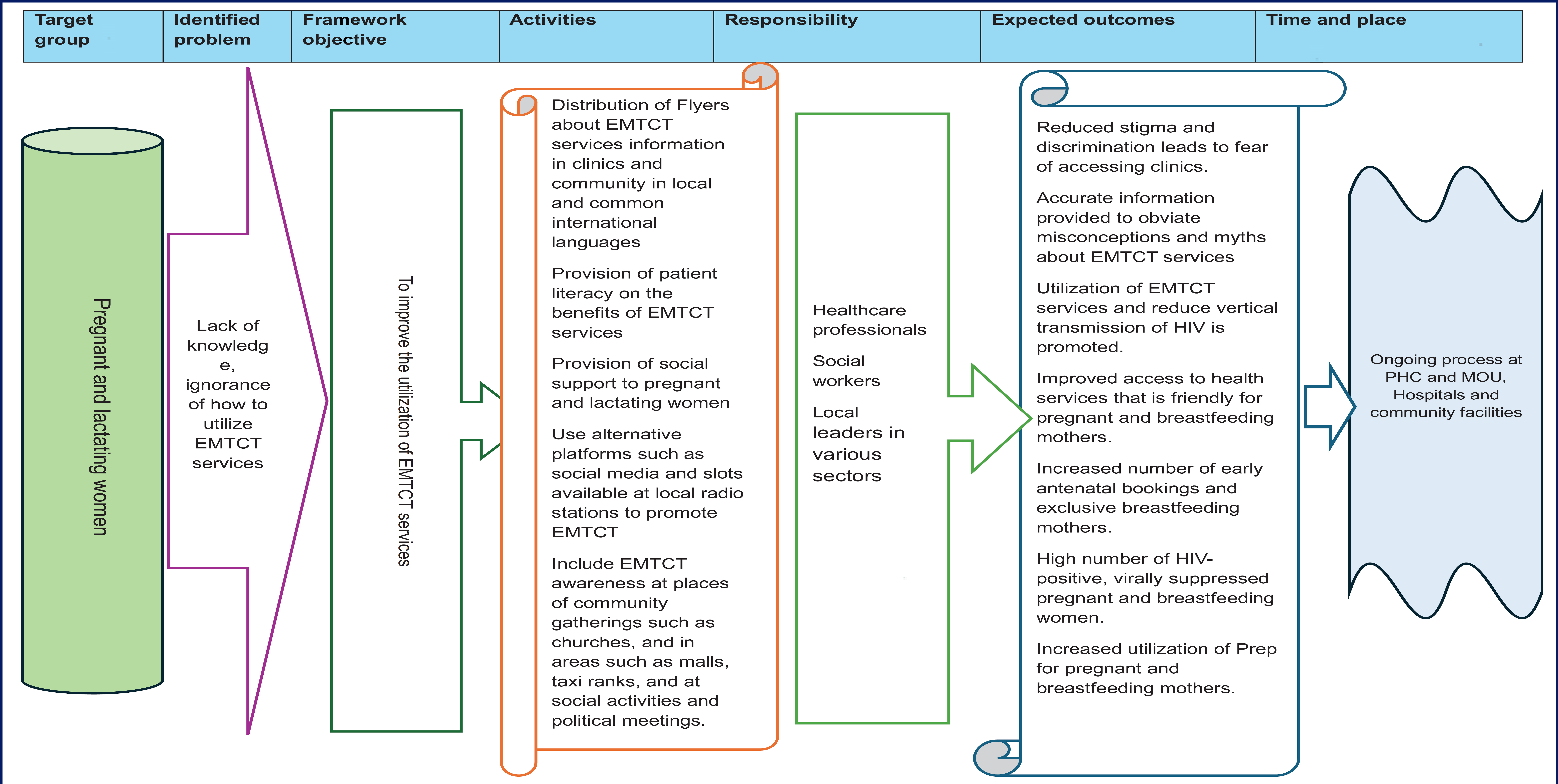
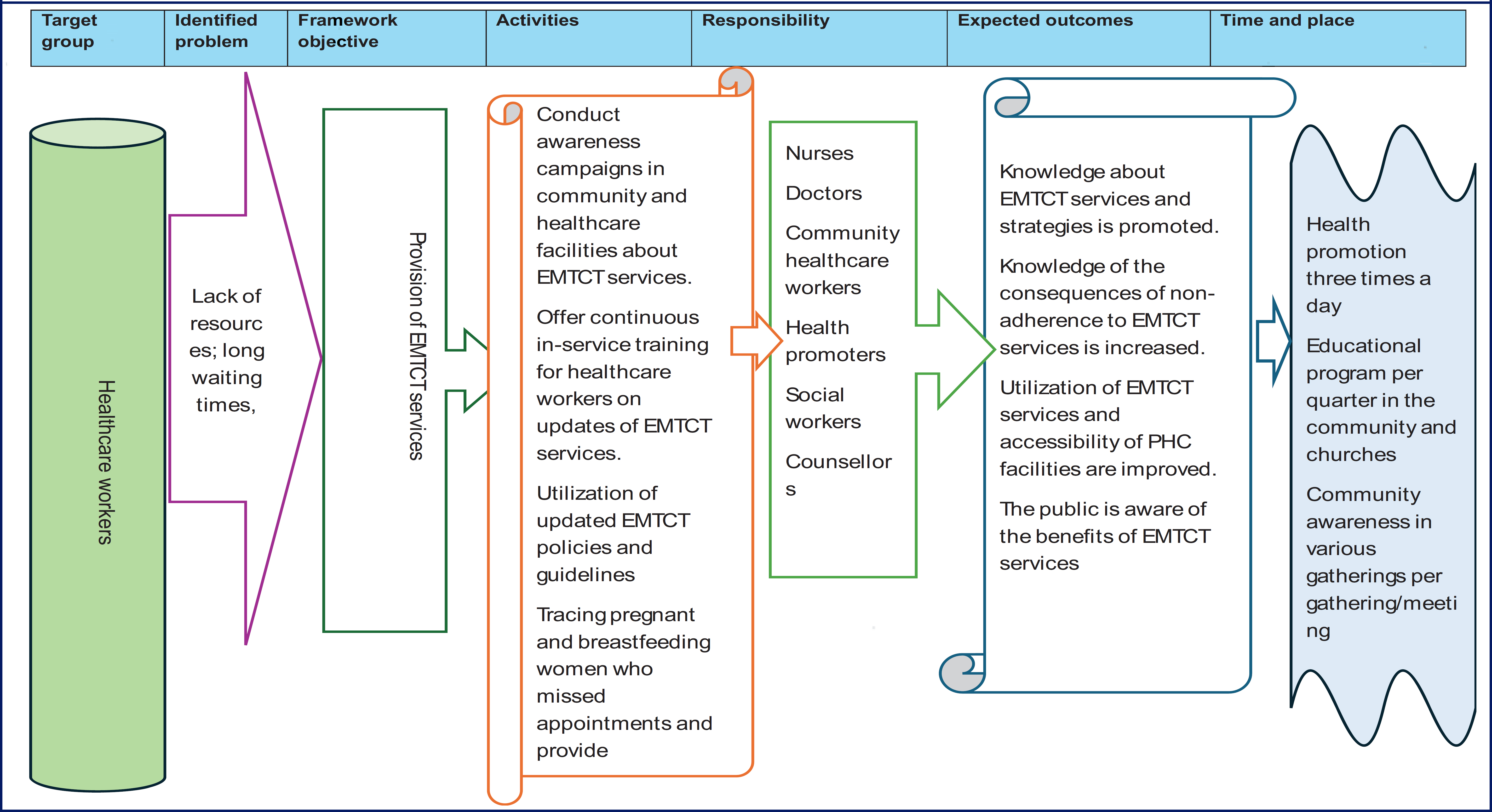
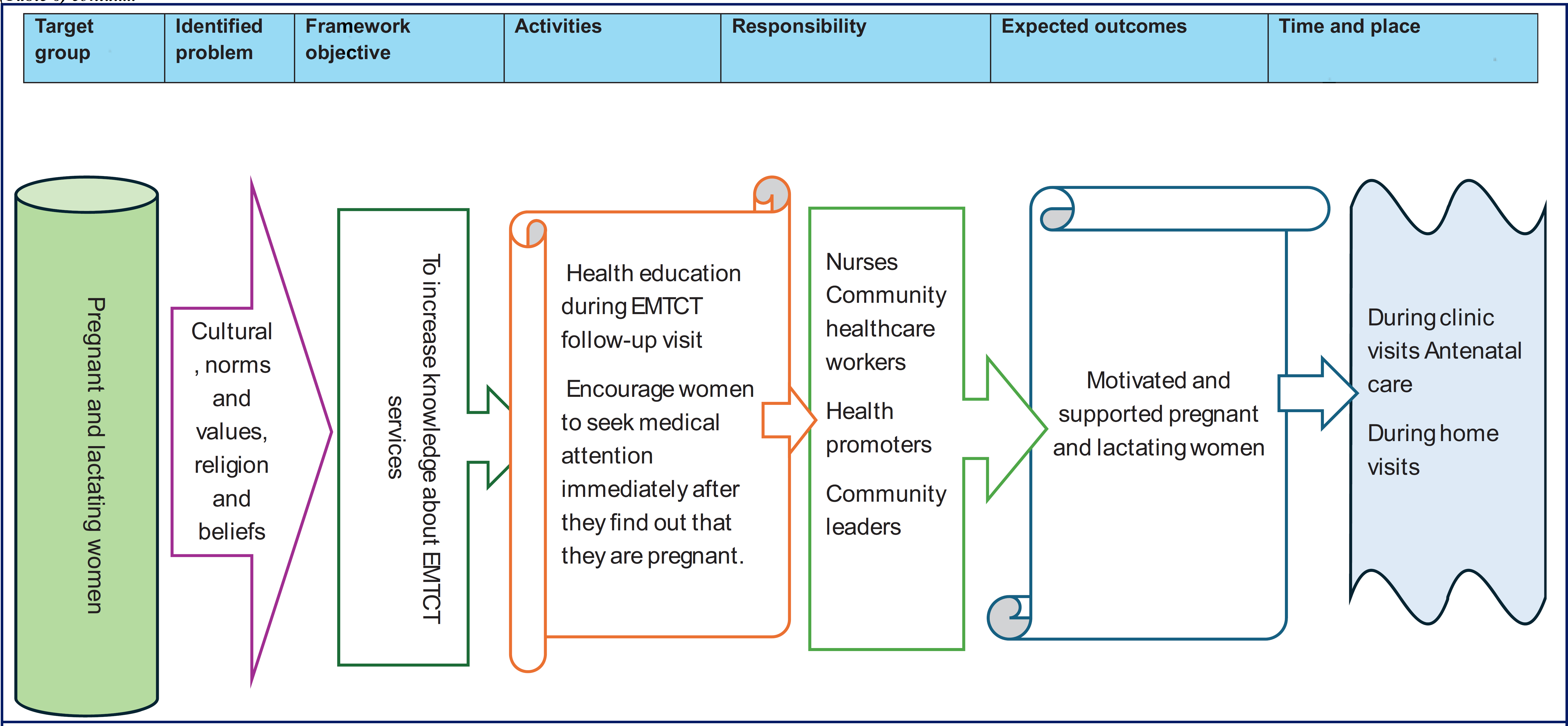
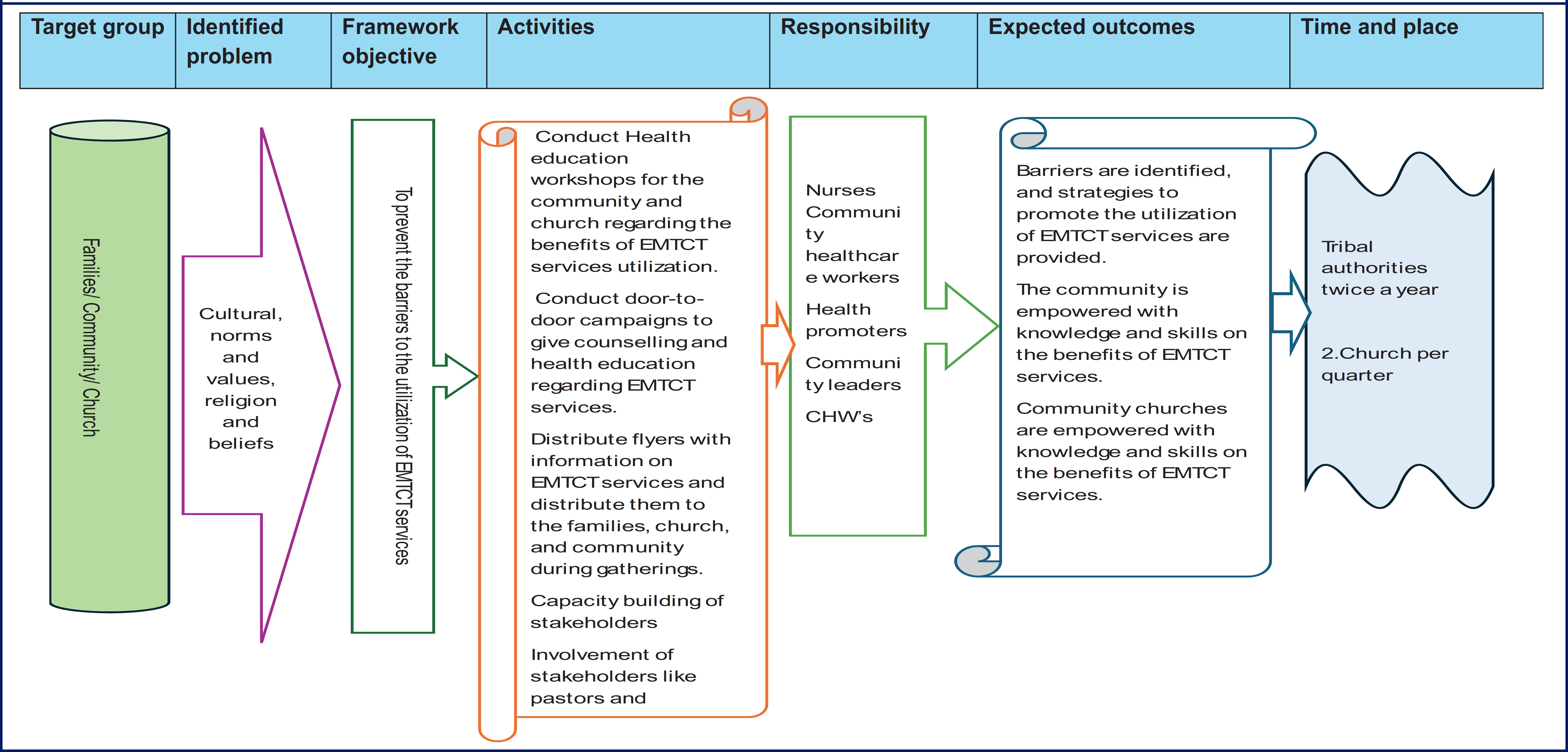
The proposed framework aims to improve the utilization of EMTCT services among pregnant and lactating women. Table 6 outlines the proposed EMTCT framework. The proposed framework seeks to address barriers to EMTCT services utilization by integrating multi-level strategies that are context-specific, evidence-informed, and community-centred. The framework will bridge gaps between facility-based services and community-level support in Gauteng province. Evidence-based practices informed the EMTCT framework; it targets individual behaviour, community norms, and health system challenges. Moreover, the framework has clearly defined objectives, activities, responsibilities, and outcomes, which serve as a practical tool for implementation.
Table 6.
|
|
|
|
3.3. Validation of the Proposed EMTCT Framework
3.3.1. Delphi Technique
The EMTCT framework aims to overcome barriers to utilizing EMTCT services among pregnant and lactating women. The Delphi technique utilizes a panel of experts for structured conversation and interactive forecasting. The Delphi technique is a structured communication method, originally developed as a systematic, interactive forecasting method that relies on a panel of experts, involving a series of anonymous questionnaire rounds to gather expert opinions and achieve consensus [17]. The EMTCT framework was guided by the study findings, which focused on the validation of the EMTCT framework and its applicability to improve EMTCT services uptake. The study findings prompted the development of recommendations, which included activities based on strengths, weaknesses, opportunities, and threats.
3.3.1.1. The Purpose of Validation of the Developed Framework
The purpose of the validation was to check whether the developed framework would be applicable to address the identified gaps from the study findings.
3.3.1.2. Methodology.
The validation of the developed framework was conducted through the application of a qualitative research approach. The researcher applied the qualitative research approach because it allowed for the possibility of generalizing results and provided participants with opportunities to share their views on the applicability of the framework. The researcher developed an interview guide to determine whether the identified gaps could be addressed through the developed framework (Annexure A). Once the quantitative and qualitative data had been collected and analyzed, the dates and times were arranged to meet the experts who had agreed to participate in the study.
3.3.1.3. Population
Experts in the field of HIV/EMTCT comprised of the assistant director of maternal and child health, the maternal and child health district coordinator, medical doctors and midwives offering EMTCT services, and other relevant stakeholders such as district supporting partners (Quality improvement (QI) manager, and QI coaches) working in the City of Ekurhuleni municipality. According to the World Health Organization (WHO), an expert in the field of EMTCT refers to the professionals with formal training and at least three years of experience in designing, implementing, managing, or evaluating programs focused on the prevention of mother-to-child transmission (PMTCT) of HIV [1].
3.3.1.4. Sampling
A non-probability sampling method was used to validate the EMTCT framework. The expert sampling method was used because the researcher sought the opinions of experts in the field of study.
3.3.1.7. Data Collection
Appointments were made with the city of Ekurhuleni municipality staff to validate the developed framework. The researcher held the first meeting on 28th of January, 2025, at the Kempton Park business centre, and the second meeting on the 3rd February, 2025, at the Winnie Mandela Clinic in the boardroom. The groups consisted of facility managers, HIV/AIDS, STI, and Tuberculosis (HAST) coordinators, quality improvement advisors, a cluster manager, and a maternal and child health coordinator. The researcher introduced herself to the participants, who were then allowed to introduce themselves.
The researcher outlined the purpose of evaluating the EMTCT framework for its applicability and efficiency. The researcher presented the background of the study that was conducted, the study findings, and the EMTCT framework. Clarity-seeking questions were answered after the presentation. The researcher conducted semi-structured interviews with the participants using a focus group. The interviews were conducted in English. The researcher and healthcare professionals of the Ekurhuleni municipality and other stakeholders made concluding remarks at the end of the meetings. The developed framework was guided by the study's findings, which employed a mixed-methods approach (qualitative and quantitative) using convergent parallel mixed methods.
The researcher presented qualitative findings and quantitative confirmatory findings. Two workshops were conducted, and the researcher discussed the impediment findings of the study with the expert. The experts concurred with the study findings and further shared their impediments to adding to the researcher’s findings. Therefore, participants referred to the framework and materials to inform its development, reporting the identified impediments and undertaking needs assessments as the first step. HBM contrast, SWOT analysis, and BOEM model were used to develop the EMTCT framework to improve the utilization of EMTCT services among pregnant and lactating women based on the findings from phases 1a and b [14, 15]. The findings revealed various barriers that impede pregnant and lactating women's utilization of these services.
3.4. Delphi Technique Results
Eleven different experts participated in the meeting, as shown in Table 7. The experts were drawn from fields such as maternal and child health, the maternal and child health district coordinator, and midwives offering EMTCT services, and other relevant stakeholders such as district supporting partners (Quality Improvement (QI) manager, and QI coaches), whose inputs were essential in improving the quality of the developed EMTCT framework.
| Participant Code | Age | Gender | Race Group | Nationality | Occupation | Trained on NIMART | Qualification | Trained in EMTCT Guidelines | Years of Experience | Area of Expertise |
|---|---|---|---|---|---|---|---|---|---|---|
| Participant 1 | 39 | M | African | South African | HAST Coordinator | Yes | B. CUR (Nursing science), master’s in public health (MPH) | Yes | 7 years | HAST |
| Participant 2 | 56 | F | African | South African | HAST Coordinator | Yes | B. CUR (Nursing science), master’s in public health (MPH) | Yes | 15 years | HAST |
| Participant 3 | 60 | F | African | South African | HAST Coordinator | Yes | B. CUR (Nursing science), master’s in public health (MPH), cPhD | Yes | 33 years | HAST |
| Participant 4 | 30 | F | African | South African | Project Manager: Quality Improvement | NO | Bachelor of Arts (BA) in Psychology, Quality Improvement | Yes | 3 years | Quality Improvement |
| Participant 5 | 47 | F | African | South African | Facility Manager | Yes | B. CUR (Nursing science), master’s in public health (MPH), cPhD | Yes | 24 years | Primary Health |
| Participant 6 | 57 | F | African | South African | HAST Clinical Mentor | Yes | Diploma in Nursing | Yes | 33 years | HAST |
| Participant 7 | 42 | F | African | South African | Quality Improvement Coach | Yes | B. Cur (Nursing science), Quality Improvement | Yes | 14 years | Quality Improvement |
| Participant 8 | 36 | F | African | South African | Quality Improvement Advisor | Yes | Bachelor of Arts (BA) in social work, Quality improvement | Yes | 9 years | Quality improvement |
| Participant 9 | 29 | F | African | South African | Cluster Manager | Yes | B. Cur Nursing science, cMPH | Yes | 10 years | Maternal and child health |
| Participant 10 | 37 | F | African | South African | Cluster manager | Yes | Diploma IN nursing | Yes | 11 years | HAST |
| Participant 11 | 39 | M | African | South African | Project Manager | Yes | B. Cur Nursing Science | Yes | 14 years | Maternal and child health |
3.4.1. Demographic Data of the Participants
Table 7 presents the demographic data of 11 participants who were selected to participate in the validation of the developed framework. A range of age groups was represented, with a median age of 39 years, spanning from 29 to 60 years. The majority (55%) of the participants were HAST coordinators working with HIV/EMTCT technical advisors to implement EMTCT services in healthcare facilities. All 11 (100%) participants were trained on EMTCT guidelines; while 82% of the group had more than 10 years of experience as midwives, which also helped with the validation of the developed framework. Many of the participants (36.3%) held master’s qualifications, followed by 27.4% who held Honours degrees, and 36.3% who held graduate degrees.
4. RESULTS
4.1. Strengths and Weaknesses
4.1.1. Strengths
All participants agreed that the developed framework could build on its strengths and overcome its weaknesses. They all agreed that the developed framework would be relevant to programs aimed at improving the utilisation of EMTCT services, and that it would capacitate and support pregnant and lactating women. They further suggested that through the involvement of clinic committees and ward committees working together with the school health through the Department of Basic Education (DBE), adolescent and young women could be informed about EMTCT services. Participants also stated that pregnancy has a stigma among various age groups, resulting in low utilization of EMTCT services.
4.1.2. Weaknesses
Participants agreed that the developed framework would improve the utilisation of EMTCT services. They further stated that collaboration between DBE, clinic committees, private clinics and doctors, community leaders, community health workers, and other stakeholders would improve the uptake of EMTCT services. The participants agreed that community involvement through awareness campaigns within the community, utilizing community radio stations and other social media platforms, would encourage women to utilize these services. The participants further suggested that quarterly in-service training for healthcare workers (nurses, doctors, health promoters, and community health workers) could keep them informed of new knowledge and skills of the EMTCT services. The participants further suggested that in-service training for nurses should be prioritized due to staff rotation within the service points in the facilities.
4.2. Opportunities and Threats
4.2.1. Opportunities
The participants indicated that the framework developed to improve the utilization of EMTCT services would explore opportunities and mitigate threats. They believed that collaboration between DBE, clinic committees, community leaders, private practitioners, clinics, churches, and families would improve the utilization of EMTCT services. The participants proposed that pregnant and lactating women should attend clinics within a 5km radius to avoid financial constraints. Furthermore, participants suggested that midwives and doctors should provide information about EMTCT services during individual consultations, regardless of whether the women had received information during health talks.
4.2.2. Threats
The participants proposed that clinicians with enough knowledge and skills should be allocated to render EMTCT services to improve its uptake. They recommended that the rotation of clinicians offering EMTCT services should be minimized and that new clinicians allocated to offer the service should be familiarised with procedures, as the present rotations had a negative impact on the utilisation of EMTCT services.
4.3. Applicability and Sustainability of the Developed Framework
All participants agreed that the developed framework would be applicable and practical to improve the utilisation of EMTCT services. The respondent proposed that EMTCT awareness be offered by community health workers and health promoters at community gathering places, such as churches, malls, taxi ranks, and during social activities and political meetings. In addition, continuous training for healthcare workers to keep them abreast with new information would improve their utilization. The participants also believed that allocating resources to EMTCT services could be easily implemented.
5. DISCUSSION
The study explored strategies to improve the utilization of EMTCT services among pregnant and lactating women in Gauteng province, integrating both quantitative and qualitative findings. The findings revealed a need for a multi-level approach, including facility-level, community, and partner involvement. Most participants indicated that facility-based interventions, such as health education and treatment navigation/appointment reminders, will enhance their utilization of EMTCT services. These results were supported by previous studies demonstrating that accessible and informative services improve adherence and retention in EMTCT programs [18-20]. However, there is a need to complement health education with individualized psychosocial support to curb persistent barriers such as stigma. Community-based intervention, particularly the use of CHWs and peer support groups, emerged from the study findings. These findings were consistent with Ritcher [21], who revealed that the use of CHWs and peer mentors improves ART adherence and early antenatal booking. The study findings further revealed that male partner involvement is the key factor associated with improved HIV testing and adherence. Similarly, Matseke [22] indicates that gender norms, stigma, and clinic accessibility can limit its impact. SWOT analysis and the BOEM model served as the foundation for the EMTCT framework that was developed. The KAP/HBM contrast, along with the study's qualitative and quantitative results, served as the foundation for constructing the suggested framework and helped define the problems. Other important components of the framework, such as community engagement and patient literacy, and training of healthcare providers, were also included. By modifying and embracing ideas that improved the end product, the SWOT analysis and BOEM model helped to direct the framework development process. Expert validation is essential to guarantee that the created EMTCT framework's viability, applicability, and sustainability meet the intended objectives [17, 22, 23]. To validate the EMTCT framework, the Delphi technique was employed [24]. Participating experts advised that DBE, the clinic committee, community leaders, private practitioners, clinics, churches, and families should work together to promote the use of EMTCT services. They believed that incorporating EMTCT education into schools’ curricula would promote the service uptake.
Studies concurred with the findings indicating that HIV stigma is a substantial obstacle to EMTCT uptake, emphasizing the importance of a multifaceted approach to promote EMTCT services [25-27]. The involvement of community leaders and other key stakeholders in the community would promote its utilization. Partnerships with community leaders would promote male partner involvement in EMTCT and support given to pregnant and lactating women [27-29]. According to Glaser [28], education given to youth about sexual reproductive health and maternal and child health issues will foster awareness and promote the uptake of these services. Therefore, DBE plays an important role in promoting EMTCT. Experts stated that clinics within 5km of women’s homes would improve the utilisation of EMTCT services. Studies have shown that accessing a clinic close to home might promote EMTCT uptake [27]. The availability of EMTCT services and community awareness about these services are the key drivers for its uptake. However, a study conducted by Mwenda et al. [30] revealed that clinic accessibility did not affect the EMTCT uptake because there were other barriers affecting these services, such as the level of education and employment status. Attending clinics within a 5km radius from home has been one of the strategies to improve EMTCT uptake. Therefore, addressing the underlying issues that hinder EMTCT service utilization is vital to improving its utilization. The SWOT analysis on the experts’ findings was employed to ensure the EMTCT framework's applicability and sustainability based on their inputs.
5.1. Limitations
The findings of the study cannot be generalized beyond Gauteng province data due to geographic differences, varying service burdens, and differing service utilization profiles among provinces, which may pose issues for broader applicability in other settings. Even though the panel of experts who validated the EMTCT framework was deemed competent, other stakeholders, such as community healthcare providers, male partners, and other district supporting partners, were not fully represented and may have missed key perspectives. Furthermore, the EMTCT framework was not validated through long-term deployment; therefore, its practical effectiveness, scalability, and sustainability are yet to be shown.
CONCLUSION
This study reveals that many women in Gauteng still encounter significant barriers to accessing and using EMTCT services. On the one hand, barriers within the health system, such as long lines, staff shortages, and negative staff attitudes, make it difficult for women to receive the care they require. Personal and social issues, such as a lack of understanding about EMTCT, unemployment, transportation costs, and even gender-based violence, impede women's full utilization of services. For some, denial, stigma, or fear of partner reactions exacerbated the situation.
However, women expressed the importance of health education, clinic appointment reminders, and the role of community health workers in connecting facilities and households. They also underlined the value of learning from one another through peer support groups, which offer encouragement and share experiences. Importantly, male involvement was regarded as critical, since partners who support, test, and understand can make a significant difference in helping women adhere to treatment and protect their newborns.
The findings highlight the importance of stakeholder engagement working together to eliminate mother-to-child transmission, in addition to medical interventions. EMTCT services can be made more accessible and successful by strengthening health care systems, reaching out to communities, and creating supportive family situations. The developed EMTCT framework clearly defines objectives, activities, responsibilities, and outcomes. The target population for the developed framework is pregnant and lactating women, healthcare workers, family/community, and churches. Experts were used to validate the EMTCT framework, and they concurred with the developed framework. The developed framework will provide an opportunity to improve the utilisation of EMTCT in Gauteng Province.
AUTHORS’ CONTRIBUTIONS
It is hereby acknowledged that all authors have accepted the responsibility for the manuscript's content and consented to its submission. They have meticulously reviewed all results and unanimously approved the final version of the manuscript.
LIST OF ABBREVIATIONS
| SWOT | = Strengths, Weaknesses, Opportunities, and Threats |
| EMTCT | = Elimination of Mother-to-Child Transmission |
| WHO | = World Health Organization |
| TNM | = Treatment Navigation Model |
| BOEM | = Build Overcome Explore Minimise |
ETHICS APPROVAL AND CONSENT TO PARTICIPATE
Ethical clearance number FSH/22/PH/17/902 (14 February 2023) was obtained from the Research Ethics Committee of the University of Venda, South Africa; approval was also obtained from the Ekurhuleni Health District Research Committee, reference number GP_202302_056 (15 March 2023).
HUMAN AND ANIMAL RIGHTS
All procedures performed in studies involving human participants were in accordance with the ethical standards of institutional and/or research committee and with the 1975 Declaration of Helsinki, as revised in 2013.
AVAILABILITY OF DATA AND MATERIALS
The data supporting this study's findings are available from the corresponding authors [N.M] and [S.T] upon reasonable request.
ACKNOWLEDGEMENTS
First and foremost, I am deeply thankful to the health professionals, HAST coordinators, quality improvement team, and facility manager experts who shared their valuable time, experiences, and insights during interviews and consultations. Their contributions were critical in shaping the developed EMTCT framework. Special thanks go to the Department of Health and the City of Ekurhuleni for granting access to facilities and supporting data collection efforts. I also acknowledge the support of the University of Venda, whose academic guidance and resources made this work possible. Lastly, I am grateful to my supervisor, Pro T.G. Tshitangano, and Dr S.E. Tshivhase for their continuous mentorship, constructive feedback, and encouragement throughout the study.